2026-10-19
Ad hoc Sentinel-2 vs tasked VHR imagery for a heritage damage claim
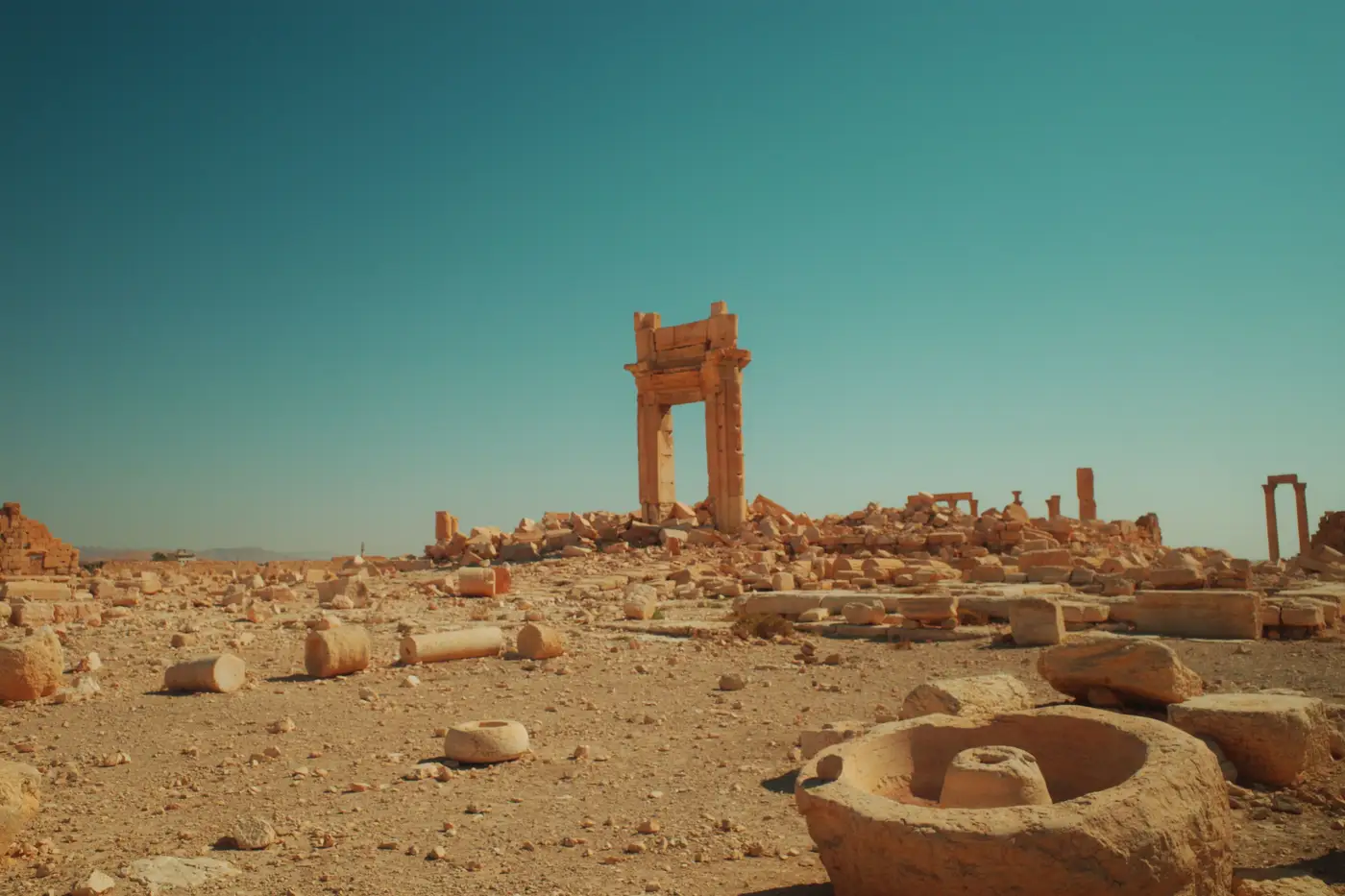
When a protected site takes a hit, the first instinct of most documentation teams is to open up the free imagery portals and see what's there. Sentinel-2 is the obvious first stop: it's free, it's public, and it covers the whole planet every few days. For a lot of monitoring work that's genuinely useful. For a damage claim tied to a specific incident on a specific date, it's often not enough on its own.
What Sentinel-2 actually gives you for a claim file
Sentinel-2's optical bands run at 10 m and 20 m ground sample distance. That's fine for tracking deforestation across a valley or watching a reservoir shrink over a season. It's a different matter when you're trying to show that a 15th-century minaret or a mosaic floor is gone. At 10 m per pixel, a building footprint can collapse into a handful of mixed pixels, and anything smaller than a house is essentially invisible as a discrete object.
Timing causes more trouble for a damage claim than resolution does. Sentinel-2 revisits a given point roughly every five days under the best conditions, and that schedule has nothing to do with when a shell lands or a bulldozer shows up. If the pass closest to the incident date is cloudy, hazy, or just happened to fall three days before the strike, you're stuck choosing between an outdated "before" frame and an "after" frame that's a week or two late. Investigators and tribunals asking "what did this site look like on the day in question" don't have much patience for "closest clear frame we could find."
There's also the archive-gap issue. Sentinel-2 has only been flying since 2015, and coverage consistency varies by region and by year. For older incidents, or for sites in areas with thin historical tasking, there may simply be no usable public frame anywhere near the date that matters.
Where tasked VHR imagery changes the record
Tasked very high resolution imagery works on a different logic. Instead of waiting for whatever satellite happens to pass overhead on its normal schedule, a VHR tasking request points a satellite or aircraft at a specific site on a specific date, or as close to it as weather and orbit geometry allow. The resulting imagery runs at 0.5 m ground sample distance or finer in RGB, which is the difference between "a dark smudge where the courtyard used to be" and an image where you can count collapsed wall sections or trace a crater's edge against the original footprint.
For a documentation officer building a claim, that precision matters less for its own sake than for what it lets you say with confidence. A coordinate-stamped, dated image lets you state, not estimate, what stood on that ground on that day, and what was there afterward. That's the kind of record a legal investigator or a heritage protection body can cite, rather than a frame that needs three caveats about cloud cover and pixel mixing before anyone will rely on it.
Matching the imagery to what the claim needs to prove
None of this means free imagery is useless. For a first alert that something happened, or for tracking slow degradation across a wide area over years, Sentinel-2's free, frequent coverage is a reasonable starting point. The limits show up specifically when the record has to stand up to scrutiny: when you need to tie destruction to a narrow date window, when the feature in question is smaller than a few pixels, or when the claim will be read by someone who's going to ask where the image came from and whether it was capturing that site on that day.
That's the gap Heritage Conflict Damage is built for. Instead of a team piecing together whichever public frames happen to exist after the fact, the service tasks event-driven VHR imagery as soon as damage is reported, and returns a dated, coordinate-stamped change record along with a land-cover classification of what was lost. It's a structured record built for that site and that date, not a search through an archive that was never aimed at it.
If your next damage report needs to hold up as evidence rather than just as a heads-up, it's worth seeing what a tasked record for your site would look like.